Pay in installments of $6.94 with
 ,
,
 and
and

Shipping Estimate
USA
- USA
- CAN
- USA
- CAN
Ships within 48 hours · Estimated delivery Aug 23 - Aug 28
 Promo Codes Available:
For Your Every Summer RSVP, with Code: SUMMER15
Description
pointy succulent with white spots Zebra Wart ‘Haworthia reinwardtii’ 4" PotIntroducing the Haworthia reinwardtii, known as Zebra wart, which is a popular succulent among plant enthusiasts, prized for its striking appearance and ease of care. This hardy, drought tolerant species is often admired for its architectural growth habit, with its tightly packed, elongated leaves that give it a unique texture. The plant is commonly found in succulent collections due to its ability to thrive in low light indoor environments, making it
Introducing the Haworthia reinwardtii, known as Zebra wart, which is a popular succulent among plant enthusiasts, prized for its striking appearance and ease of care. This hardy, drought-tolerant species is often admired for its architectural growth habit, with its tightly packed, elongated leaves that give it a unique texture. The plant is commonly found in succulent collections due to its ability to thrive in low-light indoor environments, making it a suitable choice for both novice and experienced gardeners.
Native to South Africa, the common name "Zebra Wart" refers to the distinctive raised white tubercles or wart-like structures that align the surface of the plant's dark green leaves, creating a zebra-like pattern. This patterning makes the plant highly decorative and easily distinguishable from other Haworthia species. It's also referred to as a "Zebra Plant, opens in a new tab" by some, though this term is used more broadly for other Haworthia species with similar markings.
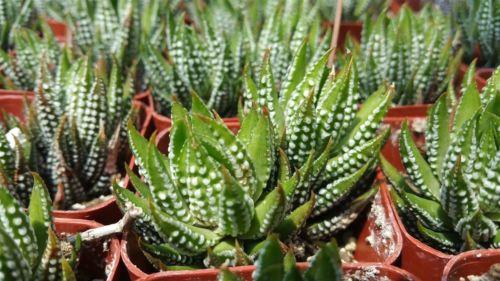
The Haworthia reinwardtii most distinguishing feature is its spiral rosette of thick, dark green, lance-shaped leaves adorned with white wart-like tubercles.
Its leaves are broad at the base and narrow to a point as it curves upward. The leaves spiral in a column and have white bumps on the outside surface.
It’s a slow-growing plant that develops offsets at its base, allowing it to gradually fill containers.
The plants compact size and low light needs make it an excellent choice for small pots, terrariums, or as part of a succulent arrangement. Its ability to tolerate lower light levels than many other succulents makes it ideal for indoor settings. It can grow up to 8 inches tall and 4 inches wide. While it may take several years to reach its full maturity, the plant remains compact and neat throughout its growth. This small stature makes it well-suited for apartment living, office environments, or as part of a windowsill collection.
The flowers of Haworthia reinwardtii bloom during spring and early summer with small, tubular flowers on long, slender stalks. The flowers are white to pale pink and are not particularly showy, but they add a delicate charm to the plant when they appear. Flowering is more likely to occur when the plant is grown in optimal conditions, such as plenty of indirect sunlight and a well-draining substrate.
When and How to Water Haworthia reinwardtii
When it comes to watering Haworthia reinwardtii, these succulents are adapted to arid conditions, so they have low water requirements. Overwatering can be detrimental to these plants, leading to root rot and other issues.
To properly water Haworthia reinwardtii, it's best to follow a "soak and dry" method. This means thoroughly watering the plant when the soil is completely dry, allowing excess water to drain out of the pot. It's crucial to avoid letting the plant sit in water as this can cause root rot.
In the spring, during the growing season, you can water more frequently, but in intense summer, during the dormant season, reduce watering to prevent overhydration. Observing the plant's leaves can also be a helpful indicator of its watering needs.
- If the leaves start to shrivel or become soft and translucent, it may be a sign of underwatering.
- On the other hand, if the leaves become mushy or discolored, it could indicate overwatering.
Light Requirements – Where to Put Haworthia reinwardtii
When growing indoors, these plants thrive in bright, indirect light for at least 4-6 hours a day. Placing them near a window where they can receive plenty of sunlight without being exposed to direct harsh rays is ideal. If you notice the leaves stretching or losing their vibrant color, it might indicate that the plant is not getting enough light.
For outdoor cultivation, they prefer full sun to partial shade for 6-8 hours a day. These succulents prefer some protection from intense prolonged sunlight, especially during the hottest parts of the day. A location with filtered sunlight or light shade, such as under a tree or a patio cover, can provide the right balance of light for optimal growth. By ensuring they receive adequate but not excessive light, both indoors and outdoors, you can help your Haworthia reinwardtii thrive and display their unique beauty.
Optimal Soil & Fertilizer Needs
The Haworthia reinwardtii favors very airy, sandy soil that drains well. Planting them in ordinary soil will result in compacted roots, stunted growth, and most likely root rot. Instead, make or buy a well-draining potting mix, or ideally use our specialized succulent potting mix, opens in a new tab that contains 5 natural substrates and mycorrhizae to promote the development of a strong root system that helps your Haworthia succulent to thrive.
In terms of fertilizer, Haworthia reinwardtii doesn't require frequent feeding. During the growing season in spring, you can fertilize them with a diluted, balanced (5-10-5), water-soluble NPK fertilizer once a year. It's crucial not to over-fertilize these plants as they are not heavy feeders. Using fertilizer with a lower concentration of nutrients can help avoid burning the roots and damaging the plant. By providing the right soil mix and a light feeding schedule, you can ensure that your Haworthia reinwardtii remains healthy and vibrant.
Hardiness Zones & More
When growing indoors, maintaining a consistent temperature between 65°F to 80°F is ideal for these plants. They can tolerate slightly cooler temperatures at night but should be protected from frost and extreme cold. Haworthia reinwardtii thrives in average room humidity levels. They do not require high humidity and are well-suited to the typical indoor environment. Avoid placing them in areas with high humidity or poor air circulation to prevent issues like fungal diseases.
When growing outdoors, these plants are best suited for zones 9 to 11, where temperatures do not drop below 20°F. Outdoor plants should be protected from frost and extreme cold temperatures to prevent damage.
By understanding the hardiness zones, temperature, and humidity preferences of Haworthia reinwardtii, you can create the optimal growing conditions for these unique succulents, both indoors and outdoors.
Propagating Haworthia reinwardtii
Propagating Zebra Wart is relatively easy and can be done through offsets or leaf cuttings. The plant naturally produces offsets, or "pups," at its base, which can be carefully removed and replanted in well-draining soil. Leaf cuttings can also be used for propagation, although they tend to take longer to root and establish. It’s important to allow any cuttings to dry out for a day or two to callous before planting to prevent rot. Regular watering should be resumed once the cutting has been rooted, keeping in mind the plant’s preference for dry conditions between waterings. This hardy and visually appealing plant is a fantastic addition to any drought-tolerant collection and provides interest year-round with its distinctive appearance.
Final Thoughts
The Haworthia reinwardtii (Zebra wart) is an eye-catching, low-maintenance succulent known for its spiral rosette of dark green leaves adorned with raised white tubercles, creating a distinctive zebra-like pattern. Its compact size, growing to just 8 inches tall, makes it ideal for small spaces, indoor collections, or windowsills. This drought-tolerant plant thrives in bright, indirect light and requires well-draining soil with minimal watering, allowing the soil to dry out between sessions. For propagation, its offsets can be easily replanted. It is perfect for beginners or experienced gardeners; this plant adds both beauty and resilience to any space.
Shipping Notes
- Free Standard Shipping on $100+ Orders to the USA.
- Except Preorder products are shipped in 48 hours.
- Delivery to the USA:
- Standard Shipping : 3-10 business days
- If time is of the essence, please consider selecting expedited delivery for faster service.
Exchange/Return Notes
- We offer a 30-day return/exchange service after receiving.
- Final sale items are not eligible for returns or exchanges.
- To process your return/exchange, please contact us at [email protected]
- Please click here for more details>>> Return & Exchange Policy